In a result contrary to all expectations, the voting results in the legislative elections in France on July 7, 2024 showed that the left-wing coalition took the lead in the second round, and President Emmanuel Macron’s camp ranked second, ahead of the extreme right, which came third. Thus, the National Rally (Marine Le Pen’s party) enters forcefully into the new National Assembly, but it remains far from power while recording a result that was disappointing to its aspirations compared to what it recorded during the first session. Thus, France finds itself immersed in the unknown, three weeks before the opening of the Olympic Games in Paris. With a hung parliament and no clear path to a governing coalition, the political deadlock in Paris continues to cast doubt on France’s ability to exercise influence in the European Union. The final results put the leftist New Popular Front coalition in the lead, meaning a left-leaning government sharing power with centrist President Emmanuel Macron. How can we read the impact of the election results and their repercussions, whether on the French interior or on the African continent? This is the main question that this report will revolve around.
First: A reading of the results of the French legislative elections.
The left-wing coalition under the New Popular Front, which unexpectedly united before the early elections in France, won the largest number of parliamentary seats in the vote in the legislative elections. President Emmanuel Macron’s centrist coalition came in second place, and the far right came in third place.
1. Election results and Macron’s popularity: The New Popular Front won first place in the second round of the early legislative elections that followed French President Emmanuel Macron’s dissolution of the National Assembly. The leftist coalition is still far from an absolute majority after winning 182 seats instead of 289. In A complex political scene. Negotiations are currently continuing within the various components of the Front to appoint its candidate for the position of Prime Minister of the new government, while the Republican Party is looking to create an alliance with Macron to rule the country. Amid uncertainty about forming a government coalition and building the backbone of a new parliamentary majority, some leaders of the former majority are pushing for alignment with the Left Party, at the risk of tearing apart what remains of the presidential camp. While it seems that the leftist coalition succeeded in uniting its ranks within only 4 days after the announcement of the dissolution of Parliament, the euphoria of victory in these elections was not able to erase the deep tensions that the political parties have witnessed in recent months, as well as the three main blocs, namely the leftist Popular Front, Macron’s party, and the National Rally. From the far right, it did not obtain a sufficient majority to govern alone. According to a poll conducted by the Elabe Foundation and the Montaigne Institute after the second round of the legislative elections, 76% of French people believe that Macron has not fulfilled his promises to change political life since he assumed the presidency in 2017, a position strongly supported by Mélenchon’s voters (89%) as well as the leader of the Rally. Nationalist Marine Le Pen (88%) as well as many of Macron’s own voters (50%). Although the scenario of an alliance between Republicans and Macron has not been ruled out, the challenge is represented by the repercussions of this matter, with there being a high possibility that this agreement will cause a split in Macronism with the departure of its leftist deputies, or a split among the Republicans with a new bleeding of party leader Eric Ciotti’s alignment with the party. National Rally (far right). In this case, this coalition will pose a threat to what remains of the presidential camp, especially since Macron has made moves that have failed every time to restore stability and legitimacy to his government and his person, the most recent of which was dissolving Parliament.
2. The New Popular Front and the impact of its victory on the political scene: The New Popular Front is a broad left-wing electoral alliance of parties in France, less than a month old. It was launched on June 10 in response to Emmanuel Macron’s call for early legislative elections. The New Popular Front brings together parties such as Proud France, the Socialist Party, the Green Movement, the French Communist Party, the Generations Movement, the Public Space Movement, and several other left-wing parties and groups. The largest party in the New Popular Front is France Proud, led by the far-left Jean-Luc Mélenchon. Although the New Popular Front has no official leader, Mélenchon is widely considered the closest person to leading it. It is expected that the failure of any of the coalitions to achieve a majority in the elections will lead France to political and economic turmoil. According to the results, the very unpopular President Macron lost control of Parliament, which means that the president who leads the Ennahda party under the center-right Together front is likely to lead the country alongside a leftist prime minister who opposes most of his domestic policies. This will result in a period of tense political coexistence, during which the president may turn into a “lame duck” who will not be able to implement his political agenda. France faces the prospect of weeks of political conflict to determine who will be prime minister and leader of the National Assembly.
3. The importance of the left’s victory for Europe now: A strong government in Paris is a key pillar of EU stability. With France now in uncharted political territory and uncertainty about its political future, some are calling for a pragmatic solution that allows France to achieve pressing priorities while fending off the far-right threat. The unexpected defeat of the far right in the second round means that France will avoid reverting to the kind of sovereign and nationalist narrative that is clearly at odds with Europe. France is currently still one of the main strongholds in Europe against the rise of the extreme right, and against the influence of Russia. The victory of the far-right National Rally party in the second round of elections, which topped the first round of voting a week ago, would have constituted an additional threat to the support provided by the European Union to Ukraine. Marine Le Pen’s party has historical ties with Russia and has pledged to curb French aid to Ukraine. The party received a controversial €9 billion loan from a Russian bank in 2014, despite sanctions imposed on Moscow over the illegal occupation of Crimea.
4. Why did the right retreat in the second round? Some attribute it to statements of a racist nature by some of its leaders after the victory achieved by the party in the first electoral round, which raised the fears of a large segment of the French people of Arab, African and Islamic origins, fears that were exploited by the leftist and socialist parties under the banner of the Popular Rally, which won first place in the second round. For elections. Among the reasons is also the understanding and agreement concluded between the Popular Rally, President Macron’s party, and other parties to prevent the victory of the extreme right, an agreement on a mechanism for withdrawing candidates from both parties to ensure that the votes are not dispersed and to ensure the victory of the candidates approved by both parties. What is worth noting is the speed of the reactions and agreement of the leftist Popular Rally and the Ennahda Party (President Macron’s party) on the mechanism of work, nominations, and influence on the bases and public opinion in order to prevent the National Rally from winning the second round. They succeeded in their mission, and within one week, separating the first and second rounds of the elections, the course of voting changed and went from in favor of the far-right National Rally to the favor of the left-wing Popular Rally. But the question remains: Will this understanding and consensus continue between the leftist Popular Rally, which includes a large segment of the oppressed, and whose share in the National Assembly (House of Representatives) is 190 seats, and the centrist, aristocratic Ennahdha Party (President Macron’s party), whose share in the National Assembly is 165 seats?
5. What comes after the elections? The New Popular Front coalition may be on track to become the largest force in the French parliament, but the coalition, which includes France Proud, the Socialist Party, the Greens and the Communists, is still far from the 289 seats needed for an absolute majority, forcing the leftist bloc to negotiate. The French constitution allows the president to choose whoever he wants as prime minister. In practice, because Parliament is able to force the resignation of the government, the head of state always chooses someone who is acceptable to the Assembly. Normally that would be someone from the largest bloc in parliament, but appointing a left-wing prime minister would run the risk of a repeat of a no-confidence vote, with support not only from the center-right and far-right, but perhaps from the president’s camp as well. Unlike many European countries, France has had no experience in forming broad coalitions since the Fourth Republic, but many left- and center-left figures have previously suggested this could be a solution to a hung parliament. However; Others argue that a major coalition, while possible in principle, would be difficult to build given the parties’ divergent positions on issues such as taxes, pensions and investment in clean energy. Others argue that rather than trying to form a formal coalition government, the major parties could form different coalitions ad hoc to vote through individual legislation. Macron has tried this strategy since losing his majority in 2022 but with limited success, having had to resort on several occasions to special constitutional powers such as the unpopular Article 49.3 to push through legislation without a parliamentary vote. The president could also consider appointing a technocratic government, of the type familiar in countries such as Italy, made up of experts such as economists, senior civil servants, academics, diplomats, and business or trade union leaders.
Second: Africa and the French elections..
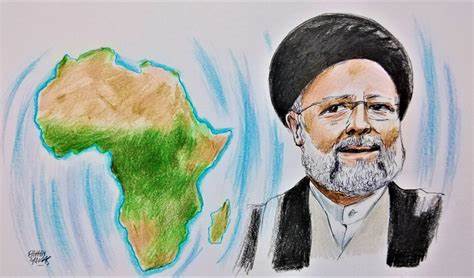
The victory of the French Left Alliance (New Popular Front) in the parliamentary elections against the French Right led by Marine Le Pen received a clear African popular welcome in the heart of France and in various parts of the continent. The winning Left Alliance coincided with the announcement of its intention to lead the country in a new phase of its history, and rejected… Cooperation with the camp of President Emmanuel Macron, perhaps an indication that this will include new trends in Paris’s foreign policies, including towards Africa.
1. Recycling French policy in Africa: France has a long-standing colonial history on the African continent, officially dating back to the nineteenth century, when France established its colonies in West and Central Africa. Its administration was characterized by exploitation, oppression, cultural invasion, and exploitation of the resources of the African colonies, and that period left lasting effects on French-African relations. “French Africa” remains a reality on the African continent, decades after independence, in light of what is known as the Monrovia Group, which provides for France’s interests in the continent until the present moment. As many factors continue to lead most sectors of the African people (especially in West Africa) to reject the French presence, with France’s acceptance clearly declining among these sectors; The efforts of successive French leaders to “recycle” their African policies, and pledge at each stage to adopt new policies; It increasingly expresses a real stagnation in Paris’ vision of developments in the political and social conditions on the continent. This stagnation is due to the history of France’s relations with African countries after its independence, and the continued view of slavery and colonialism in a positive and interpretable manner by a number of French politicians as acceptable economic processes according to their era. Under its “French Africa” policy, France also continued to consolidate its economic and financial dominance while continuing to use the French Community of Africa franc, which is issued by the French treasury. Paris also continued its military dominance with the stationing of French forces in Gabon, Senegal, Côte d’Ivoire, Chad and Djibouti. Historians have also observed the intertwining of this French military presence with the phenomenon of coups on the African continent in many cases, with French forces carrying out military intervention operations in many African countries that exceeded 60 operations. Since the independence of Africa (the largest of which was the French military intervention in Libya in 2011, which led to the deterioration of the situation in the Sahel region and a massive decline in French influence there, and France’s involvement in the crime of genocide against Tutsi groups in Rwanda is still fresh in our minds.
Second: Africa and the French elections..
The victory of the French Left Alliance (New Popular Front) in the parliamentary elections against the French Right led by Marine Le Pen received a clear African popular welcome in the heart of France and in various parts of the continent. The winning Left Alliance coincided with the announcement of its intention to lead the country in a new phase of its history, and rejected… Cooperation with the camp of President Emmanuel Macron, perhaps an indication that this will include new trends in Paris’s foreign policies, including towards Africa.
1. Recycling French policy in Africa: France has a long-standing colonial history on the African continent, officially dating back to the nineteenth century, when France established its colonies in West and Central Africa. Its administration was characterized by exploitation, oppression, cultural invasion, and exploitation of the resources of the African colonies, and that period left lasting effects on French-African relations. “French Africa” remains a reality on the African continent, decades after independence, in light of what is known as the Monrovia Group, which provides for France’s interests in the continent until the present moment. As many factors continue to lead most sectors of the African people (especially in West Africa) to reject the French presence, with France’s acceptance clearly declining among these sectors; The efforts of successive French leaders to “recycle” their African policies, and pledge at each stage to adopt new policies; It increasingly expresses a real stagnation in Paris’ vision of developments in the political and social conditions on the continent. This stagnation is due to the history of France’s relations with African countries after its independence, and the continued view of slavery and colonialism in a positive and interpretable manner by a number of French politicians as acceptable economic processes according to their era. Under its “French Africa” policy, France also continued to consolidate its economic and financial dominance while continuing to use the French Community of Africa franc, which is issued by the French treasury. Paris also continued its military dominance with the stationing of French forces in Gabon, Senegal, Côte d’Ivoire, Chad and Djibouti. Historians have also observed the intertwining of this French military presence with the phenomenon of coups on the African continent in many cases, with French forces carrying out military intervention operations in many African countries that exceeded 60 operations. Since the independence of Africa (the largest of which was the French military intervention in Libya in 2011, which led to the deterioration of the situation in the Sahel region and a massive decline in French influence there, and France’s involvement in the crime of genocide against Tutsi groups in Rwanda is still fresh in our minds.
2. The victory of the French left and Africa: The defeat of the extreme right in the recent elections received great African applause, especially in countries that have become openly hostile to France in the Sahel region of Africa. This trend has deepened: the French failure to confront the root problems that cause terrorism and violence in the Sahel region ( All the way to collusion with violent groups, according to local reports in Mali, Burkina Faso, and Niger), and ignoring local conflicts over land and water, and between farmers and herders, as the main reasons for the success of armed groups in winning new elements into their ranks. The wave of coups that followed the failure of the governments of the Sahel countries to carry out their tasks in confronting the chronic problems clearly strengthened the African popular mobilization against France and its policies. The leaders of the coups in Mali, Burkina Faso, and Niger appeared as leaders of saving those peoples from French colonial domination and the policies of its regimes. Thus, previous experiences (since the end of the 1980s at least) have demonstrated the lack of priority for Africa in France’s “institutional” foreign policies, and the continued management of this file from two angles: military and economic (exploitative). Noting that at the end of last year, the French government had already restructured the African Affairs team in the Ministry of the Interior to avoid further French failure on the continent, as was evident from the crisis in the Sahel, which did not lead to the minimum desired results. Expectations of a radical or real change in France’s African policies after the results of the recent elections may be merely temporary exaggerations in view of several considerations: the first is; The issue of these policies remains largely far from Paris’s priorities in the next stage, with its almost complete preoccupation with developments in the Ukrainian crisis. Secondly; That the economic bond linking the French Community countries to Paris remains largely represented in the sustainability of the French franc zone in West and Central Africa; Which means that France’s exploitation of the resources of member states is firmly established as a means that cannot be dispensed with or radically reviewed by the French left that wins the elections. And third; The arrival of the left actually came after significant declines in France’s influence in Africa, at least outside its focal points in West Africa and Gabon, which is evidenced by multiple statements from French officials about their country’s lack of interest in issues of governance and democracy in African countries, and thus the mission of the French government The new one will be very difficult in the short and medium term. And fourth: The traditional orientation of the French left, and according to the electoral program that it won in the last elections, will focus largely on France’s internal issues, especially lowering the retirement age, reconsidering the wealth tax, achieving gains in the housing sector for the middle and lower classes, and raising public sector wages. Fifthly; Little change is expected in the French military and security approach towards the African continent under the new leftist government. It is noted that the French government established, at the end of last June, what was known as the “African Command” within the French Armed Forces. For the purpose of performing multiple tasks; Including reviewing (or redistributing) the French military presence in Africa. This step, with the understanding of the African Command working circles to revitalize the French military presence in the neighboring countries of Mali, Niger and Burkina Faso in particular, confirms that the expected leftist government will continue the policies of the French Armed Forces in Africa without significant modifications, while other reports confirm the determination of the French Armed Forces. Reducing the number of its soldiers in Côte d’Ivoire, Gabon and Chad in the coming months at the request of a number of countries. Sixth: Although the New Popular Front obtained the largest bloc in the French Parliament; The limits of its freedom of movement remain, especially in the field of formulating African policies, while French President Emmanuel Macron maintains his powers (among them: choosing a prime minister from among more than one candidate), and his role in formulating Paris policies clearly.
Conclusion; While centrists feared that the potential rise of the far right to government in France, the second-strongest economy in the European Union, would destabilize economic and political stability and undermine the EU’s strong support for Ukraine; They breathed a sigh of relief after the election results. But despite the announcement of the result and the resolution of the legislative elections file, the challenges that could face France are not over yet. The danger of the right’s success in what it failed to do this time is still possible, especially since it has parliamentary seats, even in light of its failure to obtain what it was. He wishes it is increasing. On the other hand, the government, which will be formed according to these conditions through a broad coalition, will not be free of contradictions or differences in views, which will make the country that aspires to experience leftist rule experience a state of instability.
As for Africa; Although the victory of the French left with the largest share in the parliamentary elections in France indicates the possibility of France changing its policies towards the African continent, in line with the assumed principles of the French leftist movement (with its communist and socialist spectrums), against international exploitation and France’s well-known practices within the continent; However, the change in Paris policies remains an extremely complex issue governed by military and security (and intelligence) considerations, in addition to a range of investments and private interests. Which makes it necessary to reduce the level of expectations on this path to their minimum limits in reality.